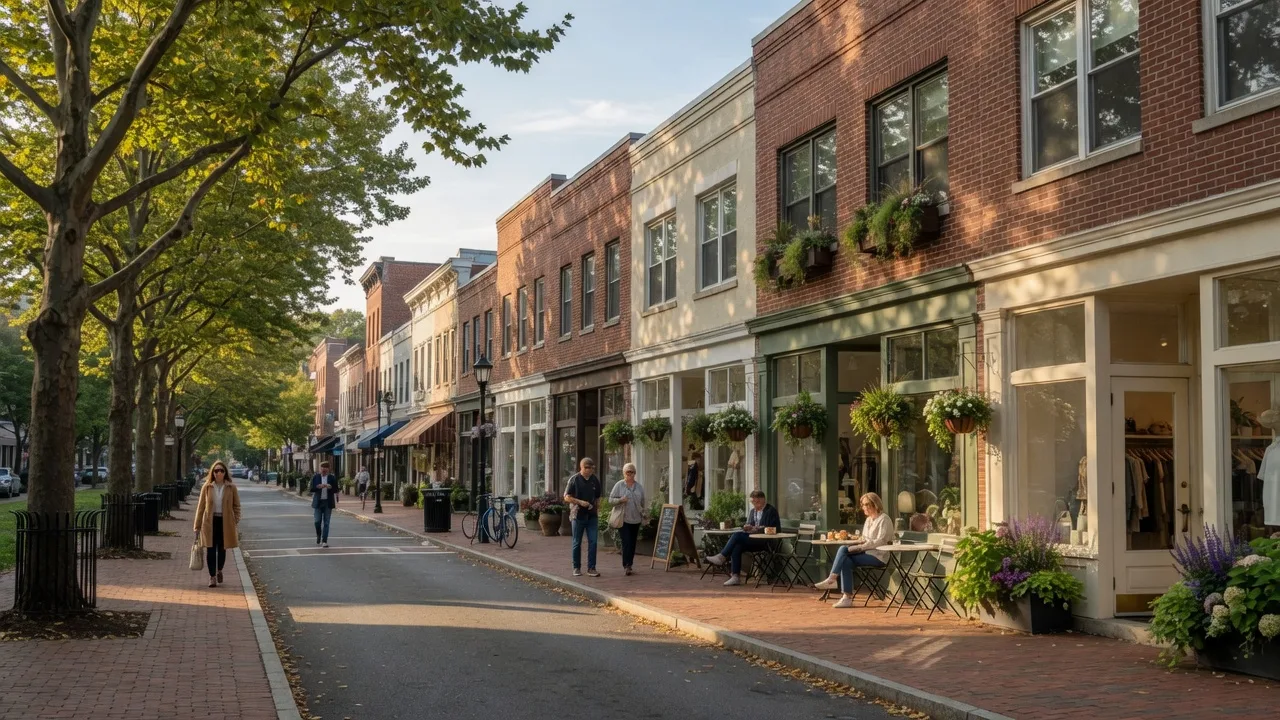
Thinking about living in our Nations Capital region but craving tree-lined streets and a bit more room to breathe? Bethesda, Maryland deserves a close look. This walkable suburb sits just inside the Beltway and offers something living in Washington, DC itself rarely does: a downtown you can park at, stroll, and forget your car for the weekend, all within a quick Red Line ride of the city.
A Medical and Federal Hub Like No Other
Bethesda is anchored by two of the region's most important institutions: Walter Reed National Military Medical Center and the National Institutes of Health, whose main campus employs thousands of scientists and medical professionals right in town. That concentration of steady, highly skilled work underpins the local Washington, DC real estate market and brings a worldly mix of cultures, cafés, and clinics to everyday streets like Bethesda Avenue and Woodmont Avenue.
Commuting to the city is genuinely easy. The Bethesda Metro station on the Red Line puts Foggy Bottom and the George Washington University campus just a few stops away, and a short transfer reaches Georgetown University and MedStar Georgetown University Hospital. For car-free recreation, the 7-mile Capital Crescent Trail, opened in 1996 along an old B&O rail line, runs from downtown Bethesda all the way down to Georgetown beside the Potomac. It is one of the DMV's great commuter and weekend cycling routes, and it links two of the best places to live in the metro area.
Bethesda Row, Woodmont Triangle, and Great Schools
The heart of town is Bethesda Row, a leafy open-air district along Bethesda Lane and Woodmont Avenue with boutique shops, chef-driven restaurants, and a Landmark movie theater. Just north, the Woodmont Triangle has become downtown's entertainment hub, host to the annual Taste of Bethesda and packed with sidewalk dining on warm evenings. Coffee lovers can start a morning at maman on Bethesda Lane, then browse the boutiques before a movie.
Families are drawn here for Montgomery County Public Schools, and Bethesda is split among some of the strongest clusters in the state: Walt Whitman High School, Bethesda-Chevy Chase High School, and Walter Johnson High School all serve different corners of town. School boundaries are address-specific, so knowing the exact home matters, and that is exactly where local expertise comes in. The balance of top-tier education, safe leafy neighborhoods, and a genuine downtown is the reason Bethesda homes consistently draw strong interest in the Washington, DC real estate market, with typical house values hovering around a million dollars and condos starting far more accessibly.
Whether Bethesda is your next address or simply on the shortlist, Robert Clarke at Coldwell Banker Realty can help you compare this suburban gem against Washington, DC proper and find the right fit for your family. Email him at robert.clarke@cbrealty.com to set up a personalized tour of Bethesda and the DMV.

Robert Clarke
Realtor · Coldwell Banker Realty · SP99196 · DC, MD, CT & MA
Engineer turned real estate agent with a Master's from GWU. I help families find their place in the DMV with a blend of technical rigor and genuine local knowledge.
Frequently Asked Questions
Common questions about schools, commutes, and pricing in Bethesda.
What are the schools in Bethesda?
Bethesda is split among some of Montgomery County's strongest high school clusters: Walt Whitman High School, Bethesda-Chevy Chase High School, and Walter Johnson High School serve different corners of town. School boundaries are address-specific, so the exact home matters.
How is the commute to DC from Bethesda?
The Bethesda Metro station on the Red Line puts Foggy Bottom and the George Washington University campus just a few stops away, and downtown DC is about 25 minutes by transit. The 7-mile Capital Crescent Trail offers a car-free bike route from Bethesda all the way to Georgetown.
How much does it cost to buy in Bethesda?
Typical house values hover around $1 million, with condos starting far more accessibly. The balance of top schools, leafy neighborhoods, and a genuine downtown keeps demand strong.
What anchors the local economy?
Walter Reed National Military Medical Center and the National Institutes of Health main campus are both in town, employing thousands of scientists and medical professionals and underpinning the local housing market.
Who is Bethesda best for?
Families, professionals, and retirees, per the neighborhood guide. The mix of top-tier education, steady employment, and a real walkable downtown appeals across life stages.
What is there to do in Bethesda?
Bethesda Row offers boutiques, chef-driven restaurants, and a Landmark movie theater, while the Woodmont Triangle hosts the annual Taste of Bethesda and plenty of sidewalk dining on warm evenings.