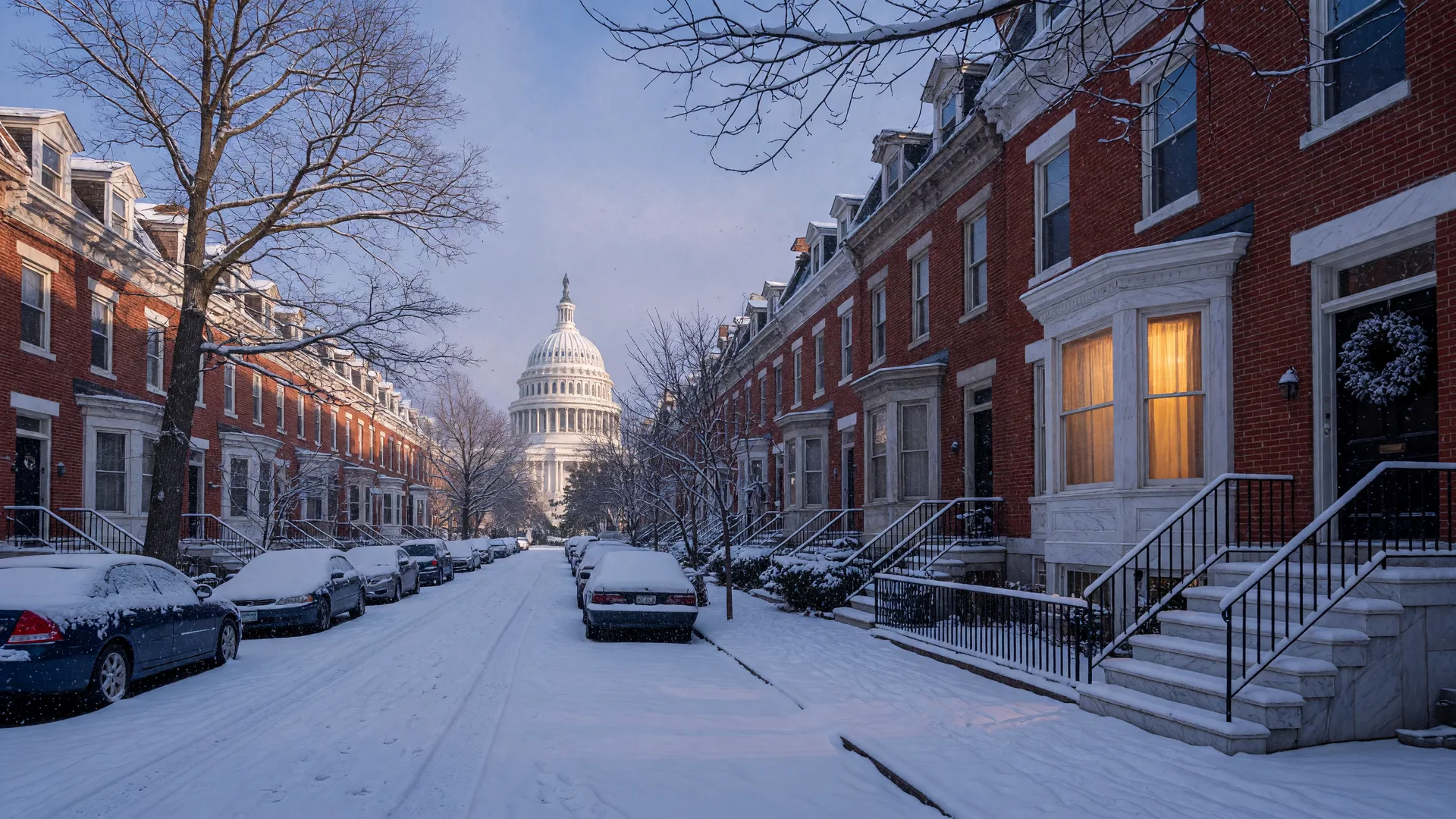
Moving to Washington, DC in winter can be one of the smartest seasons to arrive: the crowds thin, the rental market softens, and you get a real feel for the city before spring. Here is what a trusted friend wants you to know about weather, Metro, and sidewalks before the snow flies.
What a Washington, DC Winter Actually Feels Like
Washington, DC winters are cold but moderate. December averages a high near 46 degrees and a low near 34, January is the coldest month with highs around 43 and lows near 29, and February edges back toward 47. The city gets about 13 to 15 inches of snow in a typical season, with January the snowiest month. Four-inch storms happen, but true blizzards are rare. Pack a solid coat, good boots, and layers, not a subarctic wardrobe.
How Metro Handles the Snow
WMATA is well drilled for winter. In light to moderate snow up to about four to six inches, Metrorail runs near schedule, though trains fill fast. Around eight inches, Metro may suspend above-ground service and run underground stations only, with a full suspension possible in an extreme storm. Metrobus trims frequency, then shifts to snow-emergency routes, and finally halts if roads become impassable. Check WMATA.com/Snow for live status. The underground stretches of the Red, Blue, Orange, Silver, and Green lines keep running longest.
The Sidewalk Rule Every Newcomer Learns
Washington, DC's Winter Sidewalk Safety Act requires property owners to clear snow and ice from the sidewalks, curb ramps, and curb cuts abutting their home within the first eight hours of daylight after a storm ends. Residential fines start at $25 and commercial properties at $150, and never shovel snow into the street. The Department of Public Works runs a Sidewalk Shoveling Exemption Program for homeowners 65 and older or with a disability. Renters should check their lease: in many DC buildings the landlord clears the walk, but in rowhouses the duty often lands on the resident.
Neighborhoods That Shine in the Cold Months
A winter move favors walkable, Metro-served neighborhoods: Dupont Circle and Logan Circle steps from the Red Line and 14th Street dining, Foggy Bottom and the West End beside George Washington University and the Kennedy Center, and Cleveland Park and Woodley Park hugging Rock Creek Park and the Smithsonian's National Zoo. Across the river, Arlington's Rosslyn-Ballston corridor and Bethesda, Maryland, near Walter Reed National Military Medical Center, add walkable villages on the Orange and Silver lines and lively Montgomery County downtowns. Georgetown University, American University, Howard University, Catholic University, and George Mason University anchor the region's campuses, while MedStar Georgetown University Hospital, George Washington University Hospital, and Children's National Medical Center keep world-class care close.
The Best Part: Winter in Washington, DC
The cold season is one of the most beautiful times living in our Nations Capital. The Smithsonian museums on the National Mall, all free, are blissfully quiet on a January weekday. ZooLights at the National Zoo on Connecticut Avenue NW turns the park into a half-million-bulb winter wonderland. Georgetown GLOW lights up the cobblestone streets with free outdoor art, and the CityCenterDC holiday tree is an annual tradition locals love. The Kennedy Center and the National Gallery of Art fill the indoor calendar.
A Note on Washington, DC Real Estate
For buyers, winter is often a quieter, more deliberate Washington, DC real estate season: fewer listings, fewer competing offers, and sellers who list in December and January tend to be motivated. Renters often see the softest prices of the year between the holidays and February.
Whether you are relocating for a job, a school, or a fresh start, Robert Clarke at Coldwell Banker Realty would love to help you land in the right place. Email him at robert.clarke@cbrealty.com to talk through neighborhoods, timing, and your winter move to Washington, DC.

Robert Clarke
Realtor · Coldwell Banker Realty · SP99196 · DC, MD, CT & MA
Engineer turned real estate agent with a Master's from GWU. I help families find their place in the DMV with a blend of technical rigor and genuine local knowledge.
Frequently Asked Questions
Common questions about moving to Washington, DC during the winter season.
How cold does it really get in Washington, DC?
January is the coldest month, with average highs near 43 degrees and lows near 29. December averages around 46 high and 34 low, and February edges back to about 47 degrees. Lows occasionally dip into the teens, but highs rarely fall below freezing.
Does Metro stop running when it snows?
In light to moderate snow, up to about four to six inches, Metrorail runs close to normal. Around eight inches, WMATA may suspend above-ground service and run underground stations only, with full suspension possible in an extreme storm. Metrobus trims frequency, then limits service to snow-emergency routes.
Who shovels the sidewalk in DC?
Property owners must clear sidewalks, curb ramps, and curb cuts within the first eight hours of daylight after a storm ends, with fines starting at $25 for residential and $150 for commercial. Renters should check their lease, since many DC buildings handle it for you.
Is winter a good time to buy or rent in DC?
It can be. There are fewer listings, but also fewer competing offers, and winter sellers tend to be motivated. Renters often see the softest prices of the year between the holidays and February, before spring demand returns.
What neighborhoods are best for a winter move?
Walkable, Metro-served areas shine in winter: Dupont Circle, Logan Circle, Foggy Bottom, Cleveland Park, Navy Yard, and NoMa in the District, plus Arlington's Rosslyn-Ballston corridor and Bethesda, Maryland, just outside it.
What is there to do in DC during winter?
The free Smithsonian museums, ZooLights at the National Zoo, Georgetown GLOW, the CityCenterDC holiday tree, the DowntownDC Holiday Market, the Kennedy Center, Ford's Theatre, and the National Gallery of Art keep the season full of indoor and outdoor delights.