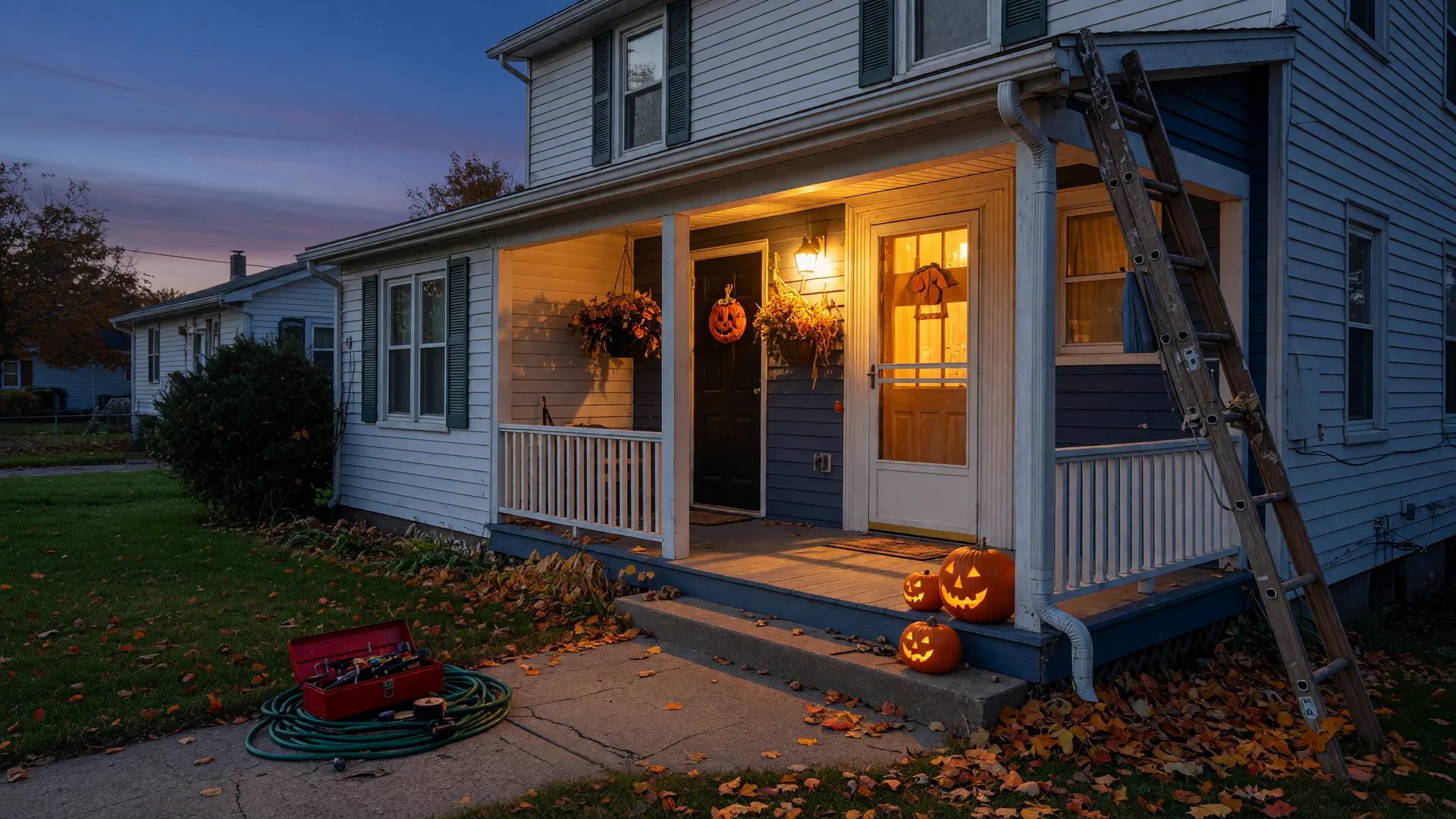
Every October I send the homeowners in my life a friendly maintenance reminder, and this year I want to share it with you too. The theme is simple: the small things you ignore around the house are the ones that quietly snowball into scary repair bills. A drip here, a draft there, a funny noise you keep meaning to investigate, these are the issues that grow while they wait. Routine upkeep is the cheapest insurance you own: it protects your home's value, keeps the house comfortable, supports a strong resale, and prevents big bills down the road.
Key Takeaways at a Glance
- Fix small issues early: A drip, a draft, or a funny noise is always cheaper to address now than after years of quiet damage.
- Six trouble spots to watch: Water, indoor air, odd noises, appliances, drafts and insulation, and landscaping deserve a regular walk-through.
- Year-round upkeep in two lists: Indoor and outdoor checklists, and most of the jobs are quick, inexpensive, and doable on a weekend.
- Know your limits: Anything electrical, structural, gas-related, or high on a roof belongs with a licensed professional.
- Maintenance protects resale: A well-kept home is more comfortable, holds its value, and shows better when it is time to sell.
Why Minor Issues Feel So Scary (Eventually)
The scariest part of homeownership is rarely a single dramatic event. It is the drip you hear every night for a year, the draft you finally notice in December, the appliance that has been working harder than it should since spring. None of these feel urgent on any given day, and that is exactly what makes them expensive. Each one quietly damages something else while you are busy living your life: moisture rots, drafts drain your heating bill, and a struggling appliance wears itself out years early.
The good news is that most of these problems give you warning signs long before they become emergencies. Learn to recognize the signals, and you can fix the small thing today instead of the big thing next year. Let me walk you through the six trouble areas I flag in my annual maintenance note, then give you the year-round checklist that keeps them all in check.
Water Drips and Slow Drains
Water is the most patient troublemaker in any house, and it starts with the little things. A leaky faucet wastes water day and night and can stain fixtures and countertops while it drips. A slow drain that gurgles when you run it is your plumbing trying to tell you something about a partial clog or a venting problem. Neither one is a five-alarm emergency, but both are easy to live with and easy to postpone. That postponement is where the damage happens, because moisture that lingers finds wood, drywall, and cabinets to quietly ruin.
Musty, Stale Indoor Air
If a room smells musty or the whole house feels stale, your home is telling you it is trapping moisture and not breathing. That same dampness that creates the smell is the environment mold loves, and it does not stay in the air: it works its way into walls, carpet, and insulation. Open the windows when the weather cooperates, run exhaust fans in kitchens and bathrooms, and keep an eye on damp basements and closets. Stale air is also a comfort problem, and an uncomfortable home is a home you enjoy less every single day.
Odd Noises Around the House
Houses are supposed to make some noise, but the wrong noises deserve your attention. Squeaky hinges are the friendly kind of problem, a drop of lubricant and a minute of your time, yet they are the classic sign of a whole drawer full of small mechanical issues waiting to be ignored. Banging pipes, often water hammer, are the less friendly kind: they signal pressure or loose plumbing that can turn into a real leak. Learn which sounds are normal for your home and which are warnings, and you will catch the expensive ones early.
Appliances Misbehaving
A dishwasher that leaves dishes dirty and a refrigerator that has started humming louder than it used to are both working harder than they should. Appliances send signals before they fail: clogged spray arms, dirty filters, and dusty coils all force them to labor longer and use more energy. A misbehaving appliance is rarely a mystery repair; it is usually a cleanup you have been postponing. Catch it now and you extend the life of the machine, and that is real money staying in your pocket.
Cold Drafts and Thin Insulation
When winter arrives in Washington, DC, the first clue that your home is leaking warmth is a cold draft along a window or door, or rooms that never quite get comfortable no matter how high the thermostat goes. Drafty windows and doors and thin insulation are not just comfort problems: they are your heating bill growing a little every month. Weatherstripping, caulk, and adding insulation where it has settled or thinned are some of the best-value projects a homeowner can tackle, because they pay you back in every season you heat the house.
Overgrown Landscaping
The outside of your house protects the inside, and overgrown landscaping is where outside starts to win. Invasive plants crowd out the native growth you want and can spread fast; unruly trees send branches up against your roof and siding, scratching shingles and giving pests a bridge onto your house. Roots wander toward foundations and walkways, and dense growth traps moisture against the exterior. A little disciplined trimming each season keeps your landscaping an asset instead of a slow-moving threat.
Your Indoor Upkeep List
- Swap HVAC filters
- Test smoke and carbon monoxide detectors
- Look under sinks for leaks
- Refresh tub and shower caulk
- Deep-clean kitchen appliances
- Vacuum refrigerator grates and coils
- Inspect the water heater
- Clean the dryer vent and hose
Your Outdoor Upkeep List
- Clear gutters and downspouts
- Trim trees and shrubs
- Check roof shingles
- Inspect siding
- Seal driveway and walkway cracks
- Inspect windows and doors
- Check outdoor faucets and irrigation for leaks
- Watch for termites or other pests
You do not have to finish both lists in one weekend. The point is that they exist and that you move through them a few items at a time, season after season. A home that gets a steady rhythm of small attention is a home that never presents you with a scary bill.
Know Your Limits: When to Call a Pro
I am all for a homeowner who tackles the weekend jobs, but some projects are best left to licensed professionals. Electrical work, anything involving gas, structural changes, major plumbing, and roof work at height all carry real risk, and doing them wrong can turn a small problem into a genuinely expensive one. The savvy homeowner knows the difference between a satisfying Saturday project and a job for a licensed pro, and knows that calling a pro early is not a defeat, it is good math.
When you are not sure, ask. I work with trusted contractors across the DMV all the time, and I am genuinely glad to recommend one for your specific project. A quick call to me beats a guess that costs you later.
The Best Compliment Is a Referral
I will close the way I close every letter I send homeowners: the best compliment I can receive is a referral. If this note helped you, or if someone in your life is thinking about buying or selling in Washington, DC and the surrounding area, I would love to hear from you. Whether it is a first-time buyer who needs patient guidance, a family sizing up a neighborhood, or a seller getting ready for the market, I will take excellent care of them the same way I would take care of you.
Frequently Asked Questions
Common questions homeowners ask about upkeep, repairs, and protecting their home's value.
Which home maintenance issues should I fix first?
Start with anything water-related, because moisture does the most quiet damage over time: drips, leaks, slow drains, and gurgling pipes. From there, move to safety items like smoke and carbon monoxide detectors, then drafts and insulation, and work your way through the six trouble areas in this article. When in doubt, call a professional for a second opinion before the problem grows.
How often should I swap my HVAC filter?
There is no one-size-fits-all answer, since it depends on your system and your household. The reliable habit is to change the filter on the schedule your HVAC manufacturer recommends and to check it during heavy-use seasons like summer and winter, when your system is working hardest.
What causes banging or gurgling pipes?
Banging pipes are often water hammer, the shockwave that travels through pipes when water stops suddenly, and gurgling drains can point to venting or drainage issues. Plumbing hides inside walls, so these noises deserve a quick look sooner rather than later: what starts as a sound can turn into a much costlier repair once the damage is hidden.
When should I call a professional instead of doing it myself?
Some projects are best left to licensed pros: electrical work, anything gas-related, structural changes, major plumbing, and roof work at height. I keep a short list of trusted contractors I am glad to recommend, so never hesitate to ask for a name.
Can routine upkeep really affect my home’s resale value?
Yes. A well-maintained home is more comfortable to live in, holds its value better, and shows stronger when it is time to sell. Buyers notice the difference, and so do appraisers. The small fixes you make today are also simpler to talk about honestly at the closing table.
Fair Housing and Equal Housing Opportunity: The information in this article is provided for general informational purposes only and does not constitute professional, legal, or tax advice. Every home is different, and maintenance needs vary with your property's age, systems, and condition; always follow your manufacturer's guidance and consult a licensed professional for work beyond your experience. Coldwell Banker Realty fully supports the Fair Housing Act and Equal Housing Opportunity. All properties and services are offered without regard to race, color, religion, sex, disability, familial status, or national origin, and in accordance with all applicable federal, state, and local fair housing laws. Robert Clarke is a licensed real estate salesperson (SP99196) in DC, MD, CT & MA, affiliated with Coldwell Banker Realty, 310 King St, Alexandria, VA 22314. © 2026 Coldwell Banker Realty. Equal Housing Opportunity.

Robert Clarke
Realtor · Coldwell Banker Realty · SP99196
Engineer turned real estate agent with a Master's from George Washington University. I help families find their place in the DMV with a blend of technical rigor and genuine local knowledge, from neighborhood deep-dives to hands-on relocation support.
Dreaming of Your Next Home in the DMV?
Whether you are prepping a house to sell, hunting for your next home, or just want a recommendation for a trusted contractor, I'm here to help. Reach out any time.
robert.clarke@cbrealty.com